Creativity Beyond the Pitch
Some of our favourite creative moments from the 2026 World Cup.
The World Cup is never only about football. It is a global stage where identity, culture, design, fashion, music and image-making all come into view. Across the 2026 tournament, some of the most interesting work has not only been happening on the pitch, but around it.
From photography and kit design to visual identity and regional cultural expression, the tournament is showing how football continues to act as a powerful creative platform.
Below is some stand out creative work built around the 2026 World Cup that caught our eye.
Watching differently
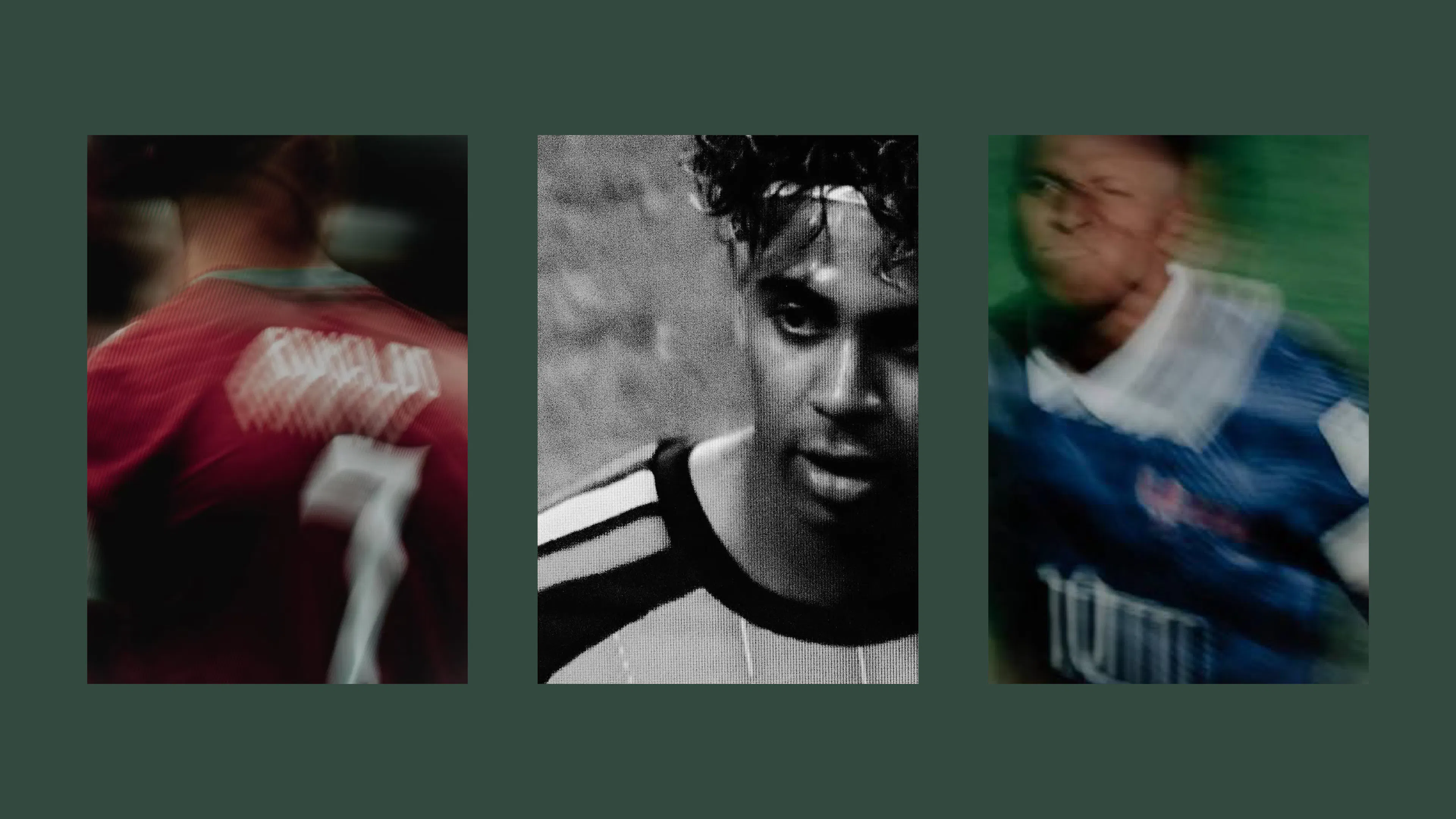
We were already fans of Flo Pernet’s work, and her World Cup TV photography has been one of the most thoughtful creative responses to the tournament so far. Working without traditional pitch-side access, she photographs the game through the television screen. Broadcast footage becomes the source material. Motion blur, cropped frames, screen texture and colour shifts become part of the image.
It is a simple yet strong idea. Most people experience the World Cup through screens and Flo’s work captures that reality and turns it into something more personal, atmospheric and unexpected.
Regional voices on a global stage
It has also been good to see creativity from the region, and from wider Middle Eastern and North African culture, showing up in more specific ways.
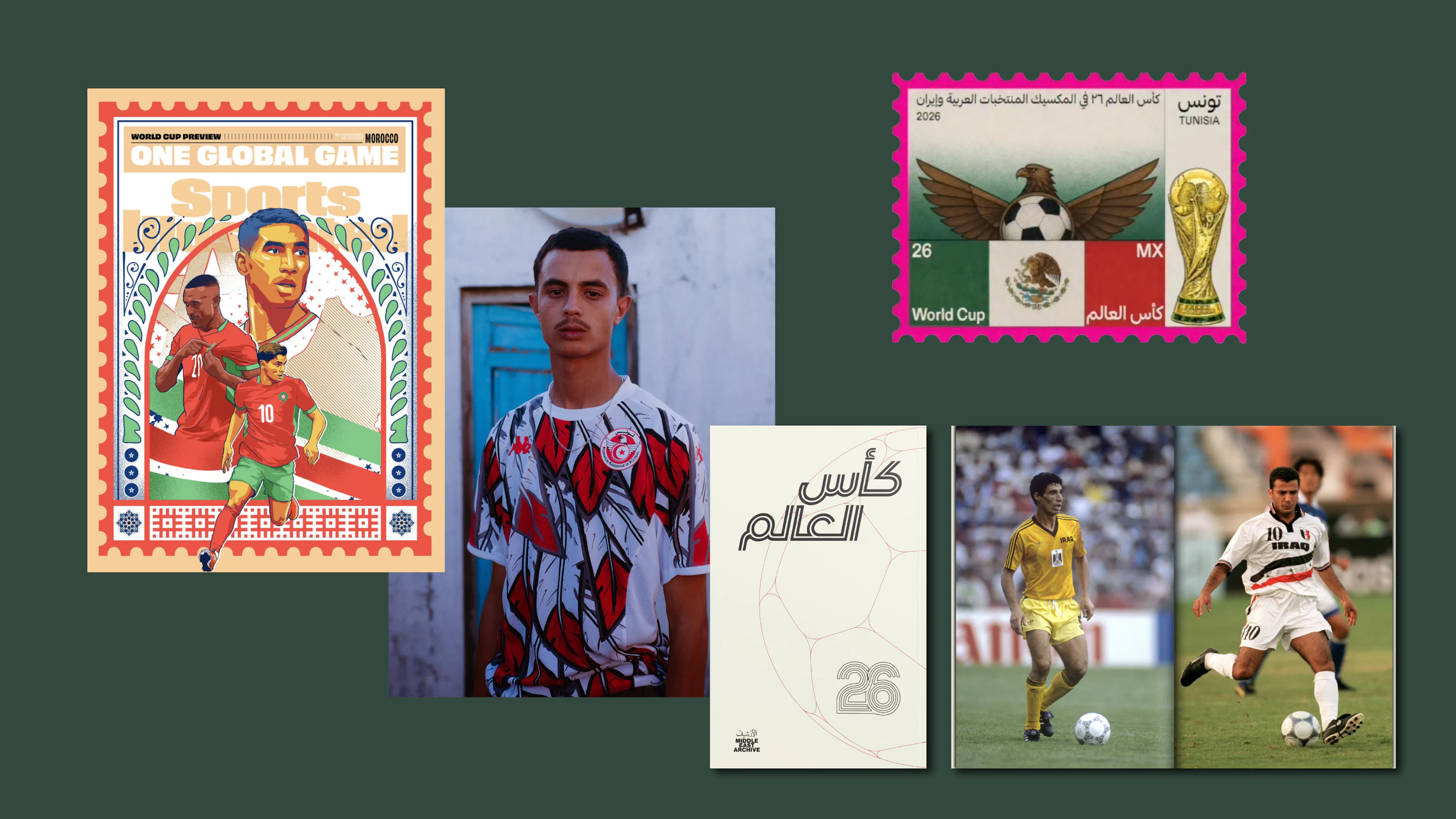
Sports Illustrated’s Morocco cover, illustrated by Moroccan artist Mohamed Elwaid, is one of the strongest examples. As part of SI’s 48-cover World Cup series, it brings together players including Achraf Hakimi, Brahim Díaz and Ayoub El Kaabi with references to Moroccan architecture and zellige patterns. It feels collectible and culturally rooted, rather than like a generic tournament graphic.
Tunisia’s Kappa collection is another strong moment. Built around the Eagle of Carthage, the kits use feather detailing across the shoulders to turn a national symbol into something physical and wearable. It is a clear reminder that kit design does not need to be loud to carry meaning.
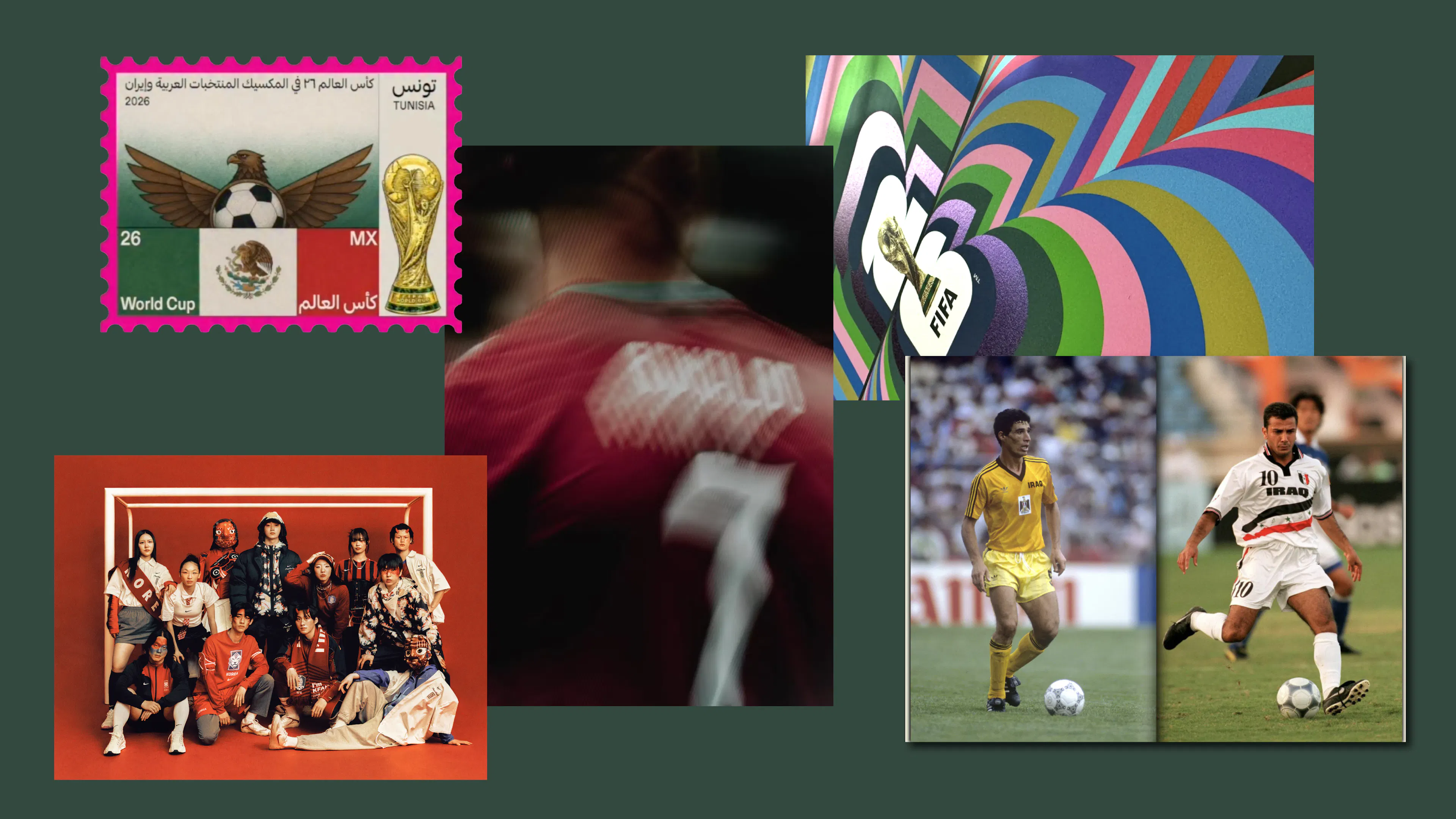
Middle East Archive’s World Cup 2026 Zine and accompanying post stamps also add a more personal, archival layer. Referencing the 1994 Algeria USA World Cup postage stamp, the stamps use a format already tied to place, travel and memory.
Together, these pieces show a more interesting version of regional representation: not just flags and symbols placed onto things, but creative work that understands how football is remembered, collected and carried through culture.
The identity in motion
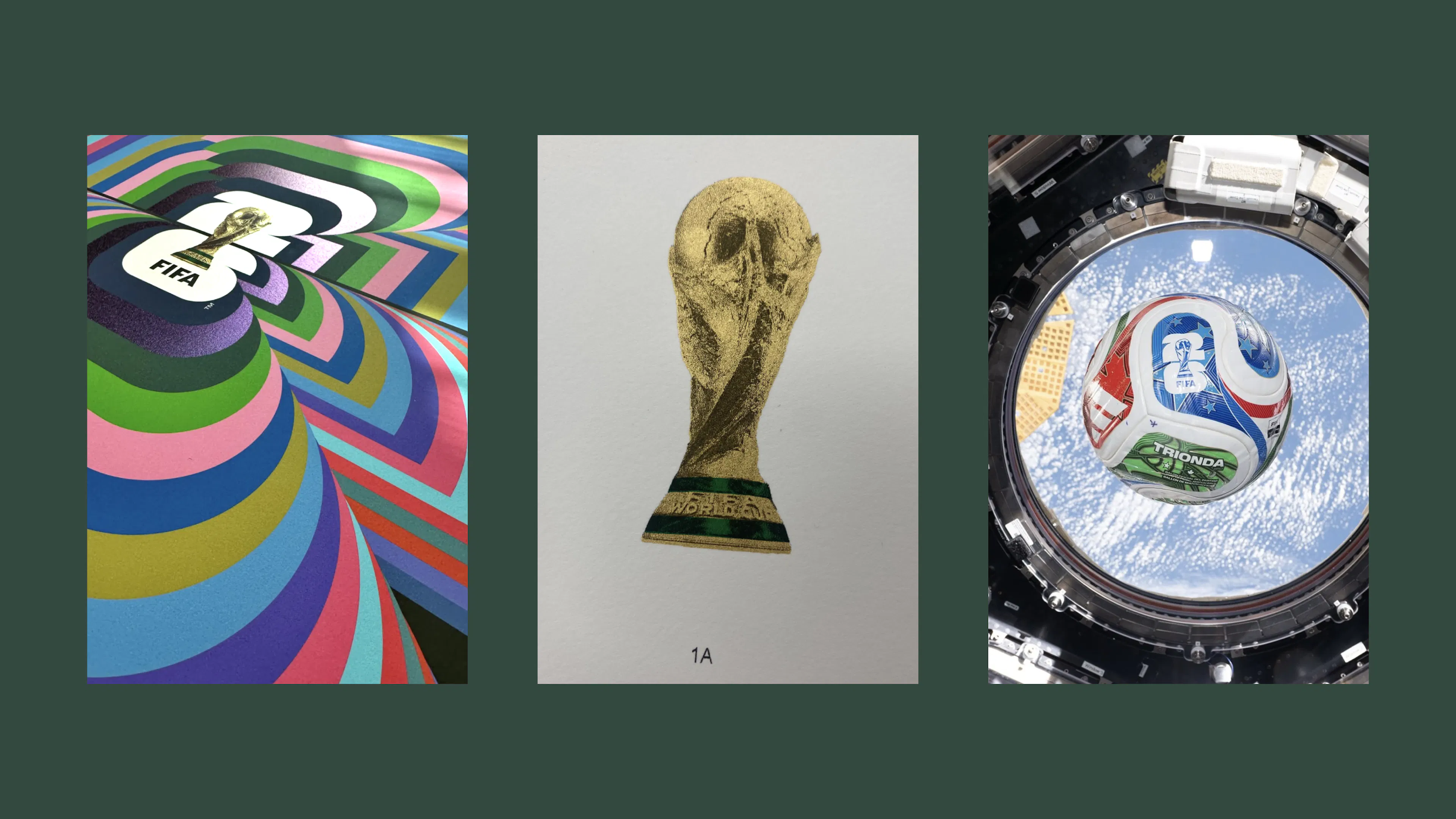
The 2026 World Cup identity had a divided response when it launched. That was not all that surprising to us. As a standalone logo, it is direct, simple and arguably a little underwhelming at first glance. It does not have the immediate charm or specificity people often expect from a World Cup mark.
But that is also a slightly unfair way to judge it. Branding rarely lives or dies on the logo alone. The real test is whether the identity can hold together a huge, complex, multi-country tournament across motion, colour, typography, host city graphics, broadcast, merchandise and social content.
Seen as a system, the 2026 identity becomes more convincing. It starts to feel less like a single emblem and more like a framework. One that can stretch across different countries, audiences and formats without becoming too fixed or nostalgic. This is where the branding comes to life.
Football as cultural product
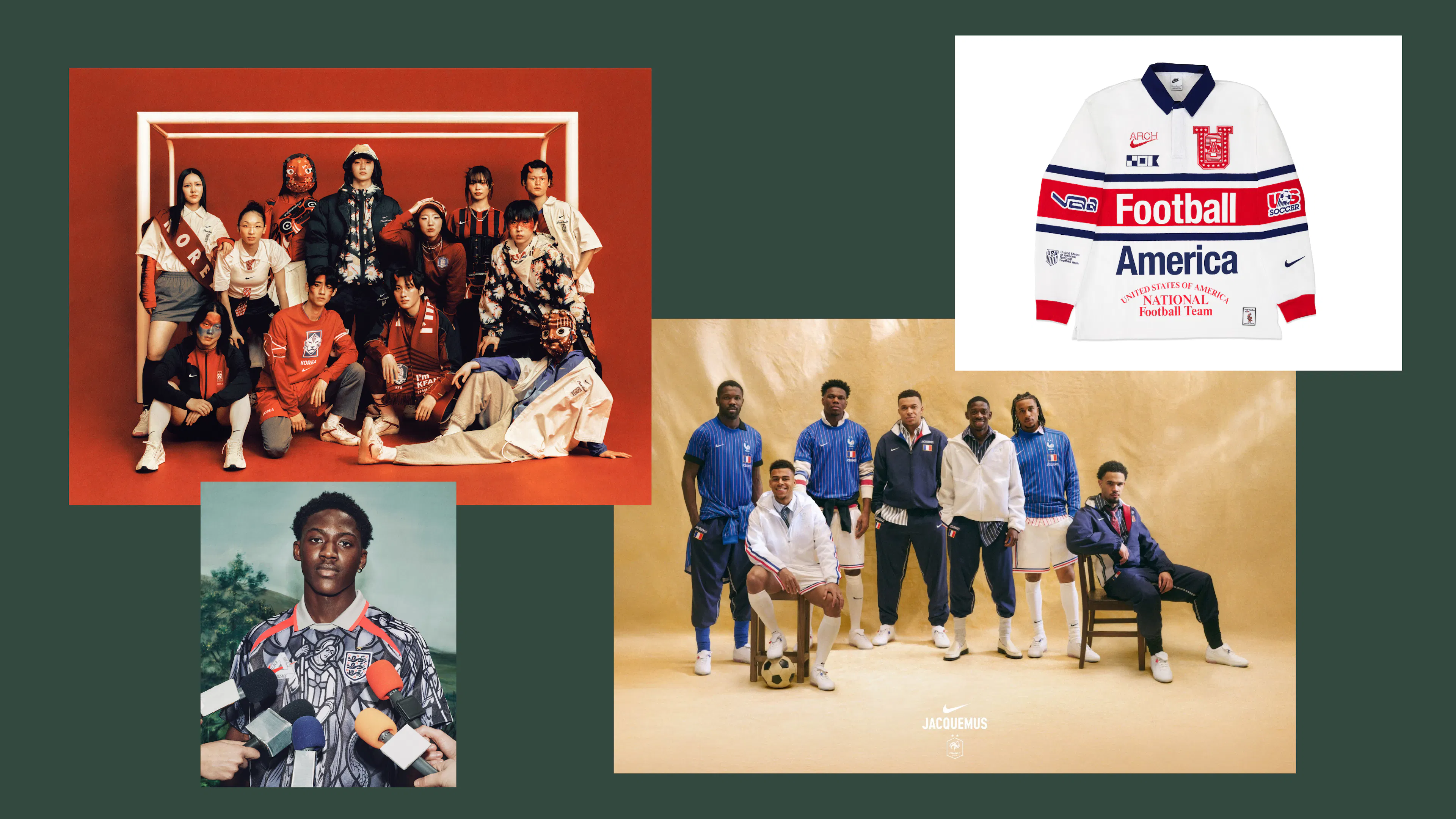
Nike’s X2 collaborations have also stood out. The project pairs national teams with cultural collaborators, including V.A.A. for the USA, PEACEMINUSONE for South Korea, Palace for England and Jacquemus for France.
This could easily have felt like brand-stacking. In places, it probably does. But the best of the collaborations work because they understand that football identity has moved far beyond the stadium. A national shirt is no longer just performance kit. It is streetwear, souvenir, symbol, memory and social currency. It lives in airports, cafes, fan parks, music videos and Instagram posts.
That is why the strongest X2 pieces feel relevant. Palace gives England a sharper, more irreverent edge. Jacquemus brings a cleaner, more fashion-led reading of France. PEACEMINUSONE connects South Korea to a wider contemporary cultural language. V.A.A. gives the USA collaboration a link to one of the most influential creative legacies in modern sport and fashion.
The idea is stronger than a normal kit drop because it recognises something true: football culture is now built as much through style and community as it is through the game itself.